














New Education Series Designed to Remove Barriers to Mental Health Treatment and Recovery
This summer, the FDA announced the final steps in eliminating the Clozapine Risk Evaluation and Mitigation Strategy (REMS) regulations by modifying labeling to reflect their February 24, 2025, decision to eliminate the REMS program. Terminating REMS is expected to help patients more easily access clozapine and marks a pivotal moment for schizophrenia treatment. However, without swift and widespread education, patients may still face unnecessary barriers to accessing this important medication.
The American Association of Psychiatric Pharmacists (AAPP) is working to address this gap, by partnering with the Schizophrenia & Psychosis Action Alliance (S&PAA) to develop a set of clinical, evidence-based courses designed to provide rapid education and appropriate dispensing guidance for clozapine. Clinicians who complete the modules will learn from schizophrenia experts in the US and internationally and will gain critical insights into managing a medication that is underutilized and live-saving for many living with schizophrenia.
Real World Health Care recently sat down with AAPP’s President, Jolene Bostwick, PharmD, BCPP, Clinical Professor of Pharmacy, Department of Clinical Pharmacy, University of Michigan College of Pharmacy, to learn more about the important role psychiatric pharmacists play in a patient’s integrated care team, and what elimination of the clozapine REMS program portends for the future of patient care.
What Is a Psychiatric Pharmacist?
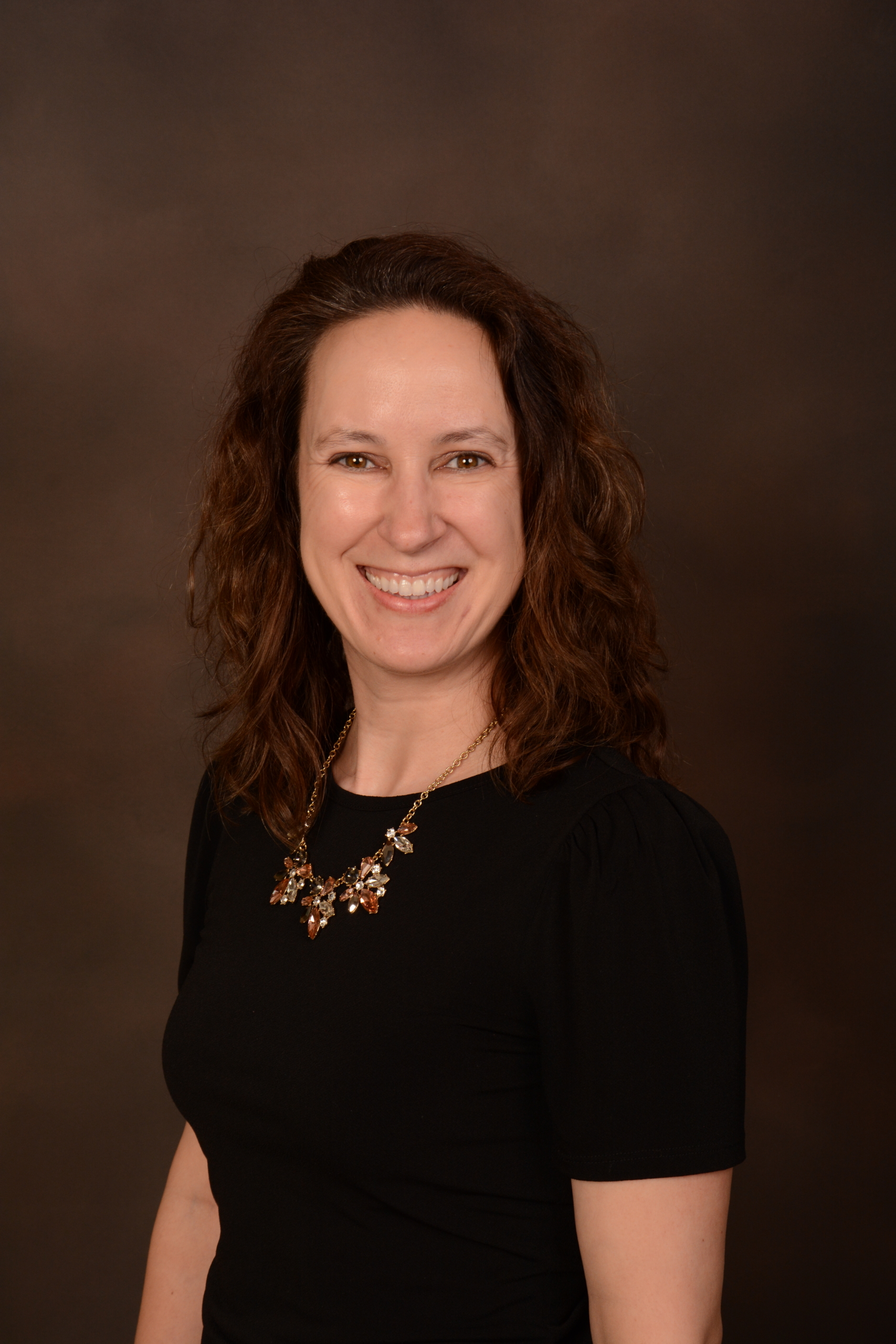
Jolene Bostwick
“The behavioral health workforce is increasingly challenged to keep pace with escalating demands for services,” Dr. Bostwick said, noting that mental illness impacts an estimated one of four people in the United States. “Given this landscape, psychiatric pharmacists play a more important role than ever in patient care. Our knowledge, experience and understanding of other disease states allows us to support the whole patient.”
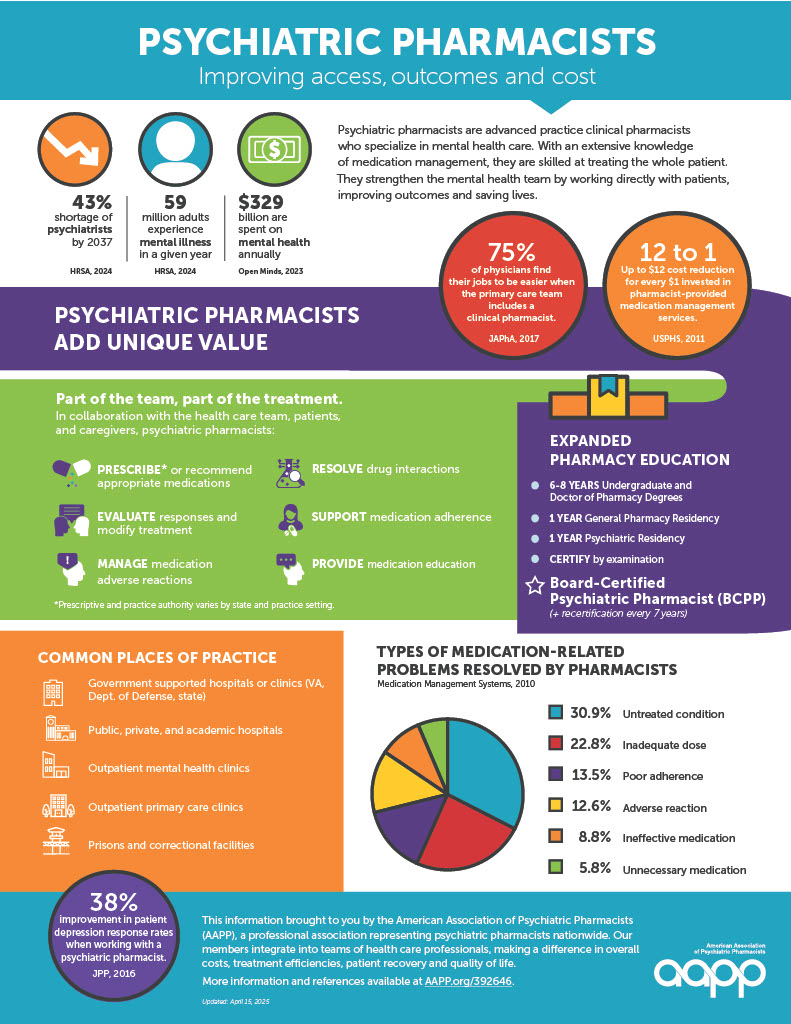
Psychiatric pharmacists go through the same initial education and training as other Doctors of Pharmacy (PharmDs), including four years of undergraduate education followed by four years in a graduate or professional program. They then can pursue a two-year pharmacy residency, where they see patients in a variety of care settings for a year before spending an additional year solely caring for patients with mental health and substance use disorders. Some psychiatric pharmacists choose to become board-certified through an examination credentialing process, resulting in the Board-Certified Psychiatric Pharmacist (BCPP) credential.
Psychiatric pharmacists deliver care in a variety of settings, strengthening the mental health team by working directly with patients, improving outcomes, and saving lives. They practice in settings such as primary care clinics where they help providers manage an increasing amount of patient psychiatric illness such as depression, anxiety, and ADHD. They also work in inpatient psychiatric units and hospitals, where they lead medication education groups and support medication selection, monitoring, and patient safety. In the VA health system, they are an integral part of the treatment team serving as a provider for veterans living with mental illness and/or substance use disorders as well as connecting patients in rural areas by providing telehealth services. They also work in specialty provider practices supporting patients with chronic disease and co-occurring mental health conditions like depression, anxiety, and substance use disorder. See examples of how psychiatric pharmacists work in wide-ranging practice settings here.
Helping Patients Adhere to Complex Medication Regimens
According to Dr. Bostwick, the medication regimens used to treat mental health conditions and co-morbidities are often complex, requiring careful titration and monitoring for side effects – challenges that psychiatric pharmacists are expertly trained to manage.
“These complex medication regimens can deter patient adherence, especially if patients feel overwhelmed or experience adverse effects,” she said. “Their mental health condition may also impact their motivation and ability to take their medications as prescribed.”
Psychiatric pharmacists use their intimate knowledge of health systems to help coordinate care patients receive through multiple providers.
“The greater the number of providers touching a patient, prescribing medications, and making medication changes, the greater the risk for errors,” Dr. Bostwick said. “Psychiatric pharmacists are highly attuned to identifying and preventing medication interactions and other problems and facilitating transitions of care.”
Psychiatric pharmacists also help patients work through medication access barriers, including high medication costs, insufficient insurance coverage, pharmacy deserts, and the inability of pharmacies to obtain certain medications due to poor reimbursement structures.
AAPP Research and Education Programs Support Professionals and Patients
AAPP conducts and supports research on psychiatric pharmacists’ positive contribution to patient outcomes. One of the goals of this research is to provide evidence of the value of psychiatric pharmacists in terms of their ability to reduce barriers to medication access, enhance the quality of care, and improve provider and patient satisfaction.
Another goal of AAPP is to provide guidance for psychiatric pharmacists, pharmacy faculty, pharmacy residents and students, and other healthcare professionals through the development of evidence-based toolkits and other clinical resources.
AAPP also issues research grants. One grant program is designed to support practice expansion through quality improvement projects that integrate psychiatric pharmacists into mental health care teams. AAPP also has an outcomes-focused grant award designed to help generate high-quality, large sample size data sets across multiple research sites and investigators on the impact of such integration.
“We also are working to advance the concept of psychotropic stewardship, based on antibiotic stewardship standards,” Dr. Bostwick said. “The initiative is designed to ensure that every psychiatric patient’s treatment plan is reviewed, optimized, and managed by a psychotropic stewardship team which is led by a psychiatric pharmacist. Our goal is to have this approach recognized by regulatory agencies as the standard of care when someone has been diagnosed with a psychiatric disorder.”
In addition, AAPP serves as the sole provider of continuing education, including recertification education for Board Certified Psychiatric Pharmacists, allowing them to stay up to date on standards of and new models for care.
And, while AAPP is primarily a professional organization, they offer helpful insights for patients and caregivers as well, including medication fact sheets in collaboration with the National Alliance on Mental Illness.
Clozapine Education Crucial as Guidance and Requirements Change
Education for pharmacists and providers is especially crucial now that they can leverage increased flexibility in prescribing clozapine for treatment-resistant schizophrenia. Starting in November, “A New Era in Clozapine Management,” the curriculum developed in partnership with S&PAA, will be available at no cost on the AAPP web site and will be approved for pharmacy (ACPE) and medical credit (ACCME).
“The original REMS policy was noble in its goals but troublesome in its effect,” Dr. Bostwick said. “It led to interruptions in treatment, greater stigma, and additional barriers to accessing this lifesaving medication, most notably the requirement for frequent blood draws. It also perpetuated misconceptions about side effects due to its hyperfocus on neutropenia. We want everyone to know that clozapine can be both safe and effective.”
Dr. Bostwick pointed to additional barriers the policy created, including burdensome paperwork requirements, issues around reporting errors, dispensing restrictions, and quantity limits. She called the REMS-related restrictions and time demands “significant” for providers, pharmacists, and patients alike. As a result, many providers have been hesitant to prescribe the medication, and some pharmacies have been hesitant to dispense it.
The new education curriculum is designed to ensure that health care professionals who were not exposed to training on clozapine during their medical education or who are not familiar with it in practice now have access to best-practice information they need to save and improve patient lives.
Editor’s Note: Are you or someone you love on Medicare and being treated for schizophrenia? The HealthWell Foundation offers up to $4,000 in insurance premium (Medicare Part B only) and medication copay assistance for eligible patients struggling with treatment costs through its Schizophrenia – Medicare Access Fund.
***If you or someone you know needs immediate help, please call 988 or visit https://988lifeline.org for the Suicide and Crisis Lifeline.***